
How to Layer Necklaces Like a Pro UK 2026: No Tangle

How to Layer Necklaces Like
a Pro
Necklace layering is one of those styling techniques that looks effortless on a fashion editor and slightly chaotic when you try it yourself. The difference is four simple rules that professional styl
The Golden Rules of
Necklace Layering
Necklace layering is one of those styling techniques that looks effortless on a fashion editor and slightly chaotic when you try it yourself. The difference is four simple rules that professional stylists follow every time.
When done right, layering transforms two or three simple necklaces into a rich, curated look that draws the eye without overwhelming it. When done wrong, it looks like you opened your jewellery box and put on everything at once. Here's how to land on the right side.
| # | Length | Description |
|---|---|---|
| 1 | Shortest (38 to 40cm) | A simple chain or small pendant. The anchor of your stack. |
| 2 | Middle (43 to 46cm) | Your featured piece. The personalised necklace that draws the eye. |
| 3 | Longest (48 to 52cm) | A longer pendant or nameplate. Adds depth and visual weight. |
If every necklace in your stack is a statement piece, none of them are.
5 Layering Combinations That
Always Work
If you'd rather not experiment from scratch, here are five tested combinations using Moonela pieces. Each one follows the rules above and creates a complete, polished look.
01 · The Classic Three-Layer Stack
- Layer 1 Birth-Year Necklace at shortest setting (40cm)
- Layer 2 Pearl Initial Necklace at middle length (45cm)
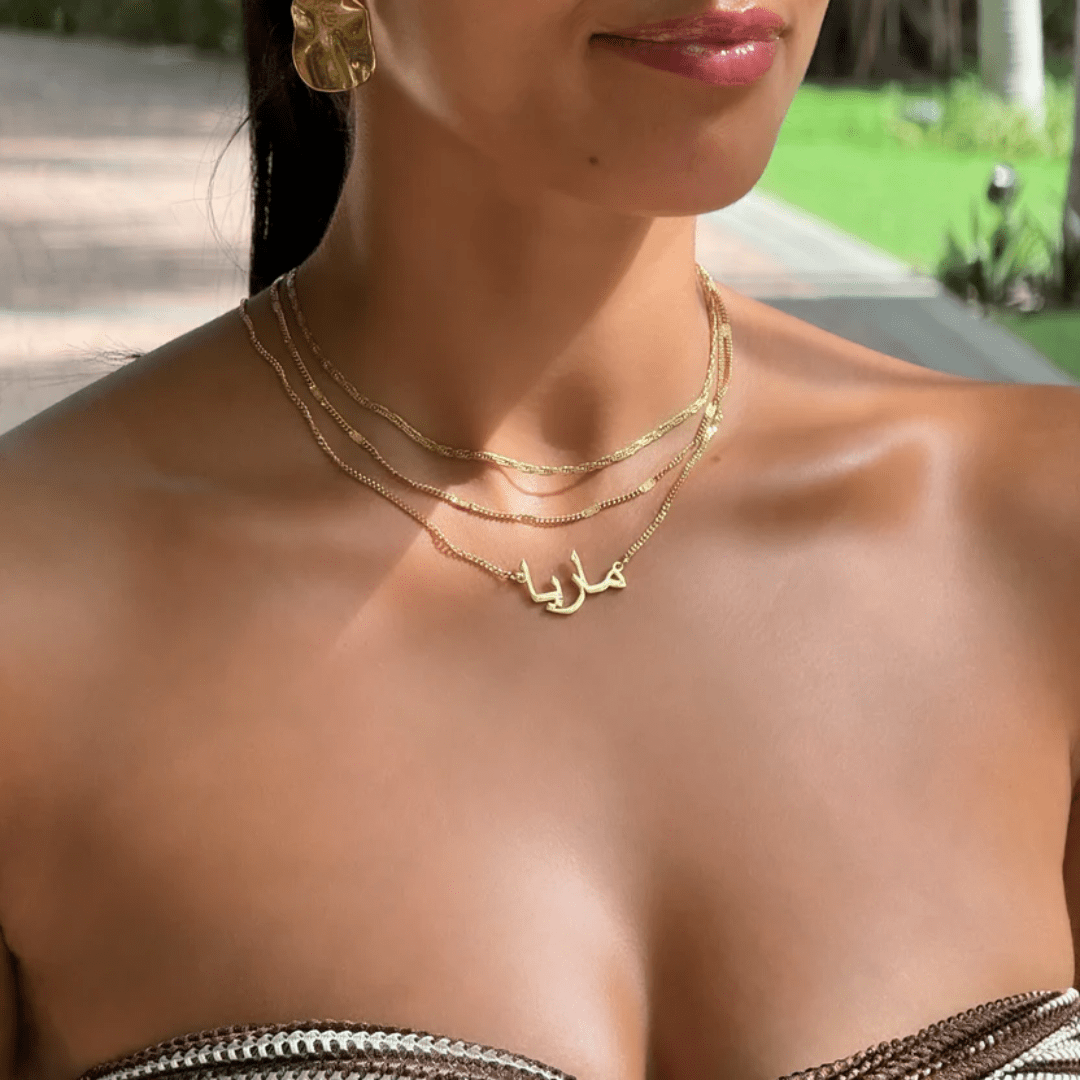
- Layer 3 Arabic Name Necklace at longest setting (50cm)
This combination builds from simple to detailed, with each layer adding more visual weight as it descends. The birth-year numerals are understated, the pearl initial adds soft personality in the middle, and the Arabic calligraphy provides a statement at the bottom. Three pieces, three levels of detail, one cohesive look.
02 · The Two-Layer Minimal
- Layer 1 Vertical Signature Necklace at 40cm
- Layer 2 Black Enamel Clover Necklace at 45cm
Perfect for everyday wear when you want something polished but not overdone. Just two pieces that create an intentional, curated look. The vertical signature sits close to the collarbone and the clover pendant drops below, adding a pop of black enamel contrast against the gold. This is the go-to combination for work, meetings, weekends and everything in between.
03 · The Statement Stack
- Layer 1 The Herringbone Chain at 38cm
- Layer 2 Angel Number Choker at 43cm
- Layer 3 Old English Name Plate Necklace at 50cm
A bold, eye-catching trio. The Herringbone Chain anchors the top with its flat, flowing texture, the Angel Number Choker sits in the middle with meaningful numerology, and the Old English Name Plate drops below as a striking focal point. This works beautifully with lower necklines and off-shoulder tops where the stack has room to breathe.
04 · The Date Night Edit
- Layer 1 Elegant Moon Necklace at 40cm
- Layer 2 Pear Cut Teardrop Necklace at 45cm
Two romantic pieces, different sizes, spaced apart. The moonstone sits close to the collarbone and the teardrop pendant drops below, catching light in a way that's quietly mesmerising. Elegant enough for dinner, subtle enough for a film. The moonstone adds a warm, shifting glow that complements candlelight beautifully.
05 · The Full Coordinated Set
- Necklace Initial Letter Necklace
- Bracelet Initial Clover Bracelet
- Ring Icy Initial Ring
Layering isn't just about necklaces. Pairing a necklace with a coordinating bracelet and ring creates a complete, intentional look that feels luxurious without being over the top. The key is keeping the same metal tone and a shared personalisation element, like your initial repeated across all three pieces. It ties the whole outfit together.
Necklines and Layering: The
Pairing Guide
The neckline of your top or dress determines how your layers sit, how much skin they have to play with, and how many chains you can comfortably stack. Here's a quick reference.
| Neckline | Layering Approach |
|---|---|
| V-neck | 2 to 3 layers descending into the V shape. The necklaces follow the natural line of the neckline, which makes the look feel intentional rather than random. This is the easiest neckline to layer with. |
| Crew / Round neck | 2 layers, both falling below the neckline. Avoid having any chain sit exactly at the fabric edge because it looks like an accident. Drop your shortest layer at least 3cm below the collar. |
| Off-shoulder / Strapless | 3 layers for maximum impact against bare skin. This is your opportunity to go all in. The more skin visible, the more room your necklaces have to breathe and the better they look. |
| Turtleneck | 1 to 2 long layers worn over the fabric. This creates drama and contrast between the chunky knit and the delicate gold. Choose longer, heavier pendants that have enough visual weight to hold their own against the fabric. |
| Square neck | 2 layers with the shortest sitting inside the square frame. The geometric neckline provides a natural border for your jewellery. Don't let chains cross the top edge of the fabric. |
Every piece includes free UK delivery, a premium gift box, and a lifetime colour warranty.
Browse the CollectionHow to Stop Your
Necklaces Tangling
Let's be honest: tangling is the main reason people give up on necklace layering. But with a few simple habits, you can eliminate it almost entirely.
Two chains of the same thickness and weight will naturally twist around each other. One thin, delicate chain paired with a thicker, heavier chain will hang at different points of gravity and stay apart. This is the single most effective anti-tangle trick, and it's why mixing textures (Rule 2) isn't just about aesthetics.


The 5cm minimum gap between layers isn't just a visual guideline, it's a physics one. Chains that sit too close together touch and twist. Chains with proper spacing hang independently. If your necklaces have adjustable chains, take thirty seconds to set the right lengths before you walk out the door.
Never thread multiple chains through a single clasp or extender. It might seem convenient, but it guarantees tangling. Each necklace should have its own independent clasp so it can move and hang freely.
Start with the longest chain first and work up to the shortest. This way, each new layer sits on top of the previous one without threading underneath. When you take them off at the end of the day, reverse the order: shortest first, longest last.
Store them separately
When you're not wearing your necklaces, hang them on individual hooks or lay them flat in separate compartments. Tossing three chains into the same pouch or drawer is a guaranteed tangle. If you travel, use a small zip-lock bag for each chain. It sounds unglamorous, but it works.
Moonela necklaces are designed with adjustable chains specifically to make layering easier. The sliding clasp system means you can fine-tune each length without needing an extender chain or a trip to a jeweller. For more care and storage tips, their waterproof jewellery guide covers how to keep gold pieces looking their best. Explore our complete jewellery layering guide and name necklace styling tips for more inspiration.
Common Layering Mistakes and
Quick Fixes
Even with the rules in mind, there are a few traps that catch people out. Here's what to watch for.
Three is the magic number for most people. Four can work if you have a long neck and an open neckline. Five is almost always too many. The point of layering is curated richness, not clutter. If you're not sure, start with two and only add a third if it genuinely improves the look.
Three chains of identical weight blur together into a single mass. The variation in chain size is what creates visual interest. Pair a 1mm cable chain with a 2mm curb chain with a pendant on a medium chain. The differences don't need to be dramatic, just noticeable.


If every necklace in your stack is a statement piece, none of them are. One bold pendant, two simpler supporting chains. That's the formula. If you have two pieces you love equally, wear them on different days rather than stacking them together.
A three-layer stack that looks incredible with a V-neck can look awkward with a crew neck. Always check how your layers sit against the specific top you're wearing. Different necklines need different approaches, and what works with one outfit won't necessarily work with another.
Your ear jewellery affects how your necklace layers look. Heavy, dangling earrings competing with a busy necklace stack creates visual overload. If your necklace game is strong, keep your earrings subtle. Small studs or huggies balance a layered neck perfectly. If you want statement earrings instead, dial the necklaces back to one or two simpler pieces.
Frequently Asked Questions
Two to three is the sweet spot for most outfits and necklines. Two creates a polished, minimal look. Three adds richness and depth. Four can work with an open neckline and longer chains, but five is almost always too many.
You can, but layered necklaces generally look more cohesive in a single metal tone. Because the chains sit close together on your neck, mixed metals can look unintentional. If you want to mix metals, do it with rings and bracelets instead, where the pieces are physically separated.


Use chains of different weights, space them at least 5cm apart, clasp each one independently, and put them on longest-first. Store them separately when not wearing them. Adjustable-length chains make spacing much easier.
Start with a 40cm or 42cm chain as your base layer (this sits at or just below the collarbone), then add a 45cm middle layer and a 50cm longer layer. Moonela necklaces have adjustable chains, so you can fine-tune these lengths without buying separate chains.
Absolutely, and it's actually recommended. A plain chain gives the eye a resting point between more detailed personalised pieces. It prevents the stack from looking too busy and lets each personalised necklace stand out more clearly.
No. Any necklaces can be layered as long as they vary in length and weight. That said, necklaces with adjustable chains are much easier to work with because you can control the exact length of each layer. Moonela's adjustable chain system is designed specifically with layering in mind.
V-necks are the easiest to layer with. Off-shoulder and strapless tops give you the most room for three or more layers. Crew necks and round necks work with two layers. Turtlenecks suit one or two long chains worn over the fabric.
Chains touching each other during normal wear won't cause noticeable damage, especially with PVD-plated pieces which are significantly more scratch-resistant than traditional plating. Avoid layering chains with sharp or protruding settings directly against delicate pieces.

Find Your Perfect Piece
Personalised 18k gold jewellery from £32. Waterproof, lifetime colour warranty, free UK delivery, and premium gift box included with every order.
Shop the CollectionNeed help choosing? Send a message and the team will pick the perfect piece.